
Our Current Campaigns
Healthcare Accessibility
2019 - Current
Gugulethu District Hospital

This campaign aims to mobilize and inform our communities and advocate for the establishment of a District Hospital in Gugulethu. In 2013, GF Jooste Hospital was closed with the promise of an improved one taking its place. However, this promise was broken. Over ten years later, more than 150,000 residents of Gugulethu must travel long distances to another district hospital or resort to local clinics that lack proper resources to treat them. Currently, the closest hospitals are Groote Schuur Hospital in Observatory and Mitchells Plain Hospital — two extremely overcrowded hospitals where people often wait days for care. As the Gugulethu population continues to increase, residents face a rise in diseases due to delayed treatment. We will not stop this campaign until the residents of Gugulethu receive the equality in health care that they deserve.
Community Engagement
2025 - Current
Eh!woza Health and Social Issues Workshops
MCSJ's Youth Forum collaborates with the Eh!woza Adult Group to create spaces where community members can explore the connections between health, science, social justice, and lived experience. Through dialogue, storytelling, participatory research, and community engagement, the partnership supports adults to reflect on the social and environmental issues affecting their communities while building leadership, critical thinking, and advocacy skills. Together, our Youth Forum and the Eh!woza Adult Group strengthen community voices and promote locally driven solutions that advance health equity, climate justice, and social change.
2019 - Current
Service Delivery Campaign
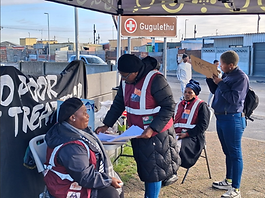
The ongoing MCSJ campaign is actively mobilizing communities to demand that local governments deliver essential services. The initiative focuses on securing clean water, decent sanitation, unblocked drainage, electricity for informal settlements, and streetlights to curb robberies. With the pivotal 2026 local government elections underway, the timing of this frontline pressure is critical. The campaign's ultimate goal is to expose severe service disparities between townships and affluent areas, fighting for an equal and fair distribution of resources for all.
Civil Society Coalitions
2026 - Current
Cry of the Xcluded

2019 - Current
Gender-Based Violence (GBV) Awareness Campaign

This year, in 2026, MCSJ joined forces with the Cry of the Xcluded movement – a movement that speaks openly about issues of austerity and xenophobia. They work to unite the middle class of South Africa by opposing budget cuts and pushing for the creation of more jobs. MCSJ attended the first unemployment contract conference in March of 2026, in which the Western Cape held an assembly with different organisations working for their communities.
Starting in 2019, MCSJ set out to hold gender-based violence marches and rallies. They focused on women and girls, but they also acknowledged that men faced violence as a result of attacks on masculinity and homosexuality. In particular, there was attention drawn to unequal power dynamics women face in society, and MCSJ sought to change this through creating the Men’s Forum. The Men’s Forum aims to raise awareness of harmful behaviors that men impose on their community. This campaign was especially relevant as GBV spiraled during the COVID-19 pandemic, resulting in MCSJ partnering with Sonke Gender Justice to create more support services for survivors and promoting education on GBV.
Educational Empowerment
Coming Soon
Organising School

Looking forward to 2026 and beyond, MCSJ and its partners are embarking on a new strategy: the launch of a Community Organising School. This initiative will consolidate years of hard-earned experience in community mobilisation into a structured curriculum designed to equip local leaders and activists with the tools they need to drive change. The School’s curriculum will include practical training in door-to-door campaigning, collective action, and advocacy, while also centering community knowledge and lived experience in health programme design.
By combining technical skills with local wisdom, the Organising School aims to strengthen community-led care networks and build long-term capacity to hold the health system accountable. This approach not only addresses the immediate gaps in healthcare access that community members currently face, but also invests in the leadership and resilience of communities themselves, ensuring that the struggle for equitable health services is grounded, sustainable, and community-driven.
Coming Soon
UVA Field School

Inspired by the pandemic’s forced separation, MCSJ opened an online field school to teach students at the University of Virginia about their work in activism. Their first session began in 2021, in which MCSJ members explained their ground work and how to get people to attend campaigns and projects. After the success of the online format, MCSJ brought 20 students to Cape Town in 2022 to introduce them to street committees and Gugulethu’s history. The most recent session occurred in 2025, in which the students helped formulate a website to give MCSJ a greater online presence.
Our Past Campaigns
Healthcare Accessibility
2016 - 2021
iALARM Campaign

2018 - 2019
Kheth'Impilo

2017 - 2018
Triage System

Starting in 2016, MCSJ worked in tandem with the iALARM program: an initiative that seeks to “raise the alarm” about the challenges men face in accessing HIV prevention, treatment, and care. The project gathers monthly health data on these services and presents it to the iALARM Task Team — a multi-sectoral group comprising representatives from local government, health services, community leaders, non-governmental organisations, and research institutions. MCSJ members regularly attended these monthly meetings, contributing to the shared dissemination of information.
Kheth’Impilo, also known as “choosing health” in Xhosa, aimed to mobilize communities in HIV/TB testing. Kheth'Impilo was failing to meet deadlines from USAID, and this is when the founder, Dr. Ashraf, called MCSJ for help. Throughout 2018, given MCSJ’s established experience in the areas Kheth’Impilo needed assistance with, MCSJ assisted in delivering HIV testing, demonstrating cross-organisation collaboration and a commitment to men and health.
Launched in 2017 in Gugulethu, the triage system campaign aimed to assist nurses in sorting patients based on the urgency of their medical needs to prioritize care. To achieve this, volunteers underwent training to thoroughly understand how the triage process worked. The campaign proved highly successful; the system established during the initiative remains in place today and has been implemented across various clinics.
Community Engagement
2022 - 2023
Load-Shedding Campaign

2021 - 2022
Bicycle Empowerment for Neighborhood Watch Patrollers

The electricity crisis is a structural issue dating back to 2007, reaching an unavoidable peak in 2022 when some areas were left with only two to six hours of power a day. In response, MCSJ partnered with religious groups and grassroots organisations like #UniteBehind and COSATU to protest the devastating impacts of load shedding. The campaign focused on how these power cuts cause food loss, exacerbate inequality, and force clinics and hospitals to operate without power, leading to the expiration of vital refrigerated medications.
MCSJ noticed that neighborhood watch patrols at night were not mobile, so they pitched the idea of using bikes. As a plan of action, MCSJ started fundraising, receiving support from UCT, Acacia Global, UVA, and individual donors. They began with donating 12 bikes at the Gugulethu sports complex and worked their way up to raise money for about 250 bikes, showcasing the massive success of the campaign.
Furthermore, MCSJ took note of how the groups who received the bikes weren’t sure how to maintain them. To address this, MCSJ raised enough money to hire bike maintenance personnel, ensuring the long-term sustainability of the program.

2020
COVID-19 Response

2018
School Fence
When COVID-19 triggered a nationwide lockdown in South Africa in March 2020, Eric Goemaere from Doctors Without Borders (MSF) reached out to MCSJ. In response, MCSJ and MSF joined forces to train 50 individuals on COVID-19 awareness, social distancing, and mask usage. These trained volunteers then launched a public education and door-to-door surveying campaign across Gugulethu and Khayelitsha. The initiative proved vital in fighting the heavy influx of health misinformation and vaccine skepticism in these communities.
The school fence campaign took place at Nobantu Primary School in 2018. Initiated by parents and staff members, the campaign involved collecting testimonials from parents, organising protests, and submitting a memorandum. Their primary demand was the provision of a proper fence to ensure student safety and alleviate teachers' fears for their security, which had raised concerns that staff might leave for safer schools. Ultimately, the campaign was successful, and the school received its new fence.
Civil Society Coalitions
2024
ZA2024 (Zackie Achmat)

Mandla, a dedicated activist of MCSJ, has a longstanding history with Zackie Achmat, as they worked together at Treatment Action Campaign, both being passionate about HIV activism. Therefore, when he ran as an independent candidate for parliament, MCSJ worked hard in mobilizing and organising for him.
They moved around communities, employing people to work with the campaign and educating the public on government corruption and why Zackie Achmat would help combat that. Although Zackie did not ultimately get a seat in parliament, he still received more votes than all other independent candidates, marking a historic point in South African history with his pro-queer and pro-working-class public stance.
2021 - 2024
Fight Against Corruption with UniteBehind

Since 2021, MCSJ has collaborated with #UniteBehind to expose systemic corruption in South Africa. Their demands are clear: corrupt members of parliament must be impeached. Additionally, the campaign aims to draw urgent attention to corruption within the Passenger Rail Agency of South Africa (PRASA). To voice these demands, the organisations have held joint protests targeting parliament and government leadership. They have also hosted numerous night vigils, inviting a variety of speakers to address the issue of corruption and fostering wider collaboration with multiple other organisations.
2016 - 2019
NHI March and Awareness Campaign

In April of 2019, the National Health Insurance (NHI) was highlighted as a national service that ensures all South African citizens (and legal long-term residents) are provided with essential healthcare, regardless of their employment or economic status. This was signed into law in South Africa in 2024; however, there remains an issue of implementation. To address these issues, MCSJ led protests to ten private health facilities in Cape Town. More than 600 marchers from Gugulethu and Khayelitsha, alongside SGJ, MCSJ, and PHM, joined the action.
Furthermore, MCSJ wrote a Memorandum of Understanding (MOU) to Minister of Health Aaron Motsoaledi to pressure the government to act on issues with public health facilities. They raised conversation around lack of pharmaceuticals and drugs in township clinics, long waiting times, the mismanagement of patient folders and staff, and the rural-urban divide that results in long commutes.
Educational Empowerment
2018 - 2019
School Condom Campaign

The school condom campaign aimed to improve accessibility to contraceptives across multiple campuses. In collaboration with Rachael Gibson, a sexual health researcher from the U.S., the initiative promoted the distribution of sanitary towels and menstrual cups, alongside condoms and comprehensive sexual education. The campaign spanned five to six schools, the majority of which are located in Gugulethu. As a lasting result of this initiative, educators from various NGOs continue to conduct reproductive health talks at these schools today.
Our Forums


Youth Forum
Men's Forum
Street Committee Transformation Forum
The Youth Forum aims to provide a platform where young people can engage with one another, participate in programs, and share ideas on how to address issues they might not otherwise have the opportunity to confront in their busy daily lives.
One core area of focus is youth development, which addresses social challenges such as substance abuse, health risks, and mental health struggles. Furthermore, the forum draws attention to unemployment by tackling underlying issues such as a lack of skills development among young people, limited access to higher education, and a lack of work experience.
The Men’s Forum pursues three clear goals: providing support and encouragement for men, shifting community norms to deepen the understanding of masculinity, and connecting men to essential organisations and services. To turn these goals into action, the forum coordinates a diverse range of activities focused on men's health and HIV. These initiatives include hosting large community meetings on gender-based violence (GBV) and organising "Men’s Dialogues" to discuss HIV and wellness.
Additionally, they provide leadership, gender transformation, and GBV training for emerging community leaders, host a Men’s Health Summit, and partner with local football clubs to engage boys and young men in discussions around health, HIV, and GBV.
Street committees were created during apartheid to organise and mobilize communities. Street committee members are elected to address safety concerns, collect data, and give their street a voice. MCSJ created the Street Committee Transformation Forum to empower this local level of self-governance by emphasizing the importance of democracy and public participation.
This forum organises workshops to educate these community leaders and increase their involvement in larger ward committees. MCSJ aims to ensure that services are provided with proper consultation from the community, so that no resources are well intentioned but misguided.
Research Indabas
The MCSJ Research Indabas were created to establish a more collaborative and community-driven approach to research. For many years, researchers conducted studies on Gugulethu and neighboring communities without giving residents a chance to engage with the findings. In response to this dilemma, MCSJ partnered with the University of Cape Town (UCT) and the University of Virginia (UVA) to hold an event grounded in mutual respect and an opportunity to share knowledge in all forms.
1
2018
The 2018 Research Indaba highlighted men and health and was linked to the iALARM research project — a project led by Brown University. The event allowed for a space where UCT researchers and community members could collaborate and discuss ways to improve men’s access to testing and treatment for HIV. The event was an impressive feat, with over 800 attendees.


2
2019
Building on the success of the previous year, MCSJ and the iALARM team hosted a second Research Indaba in 2019. The event was intentionally smaller to delve into even more meaningful dialogue between researchers and residents on what could be local solutions for promoting men’s health.
Watch this video to learn more!

3
2025
In 2025, the Indaba maintained the theme of men and health with the added goal to expand this to include young people, chronic issues and not solely focus on HIV. Research topics presented included:
-
Men, alcohol and drug abuse
-
How boys make decisions about their sexual health, based on love or romantic feelings
-
How young men in urban informal settlements experience living with and without fathers
-
What men prefer to help them stay on TB treatment
-
Beliefs about antiretroviral therapy among Pentecostal pastors
Watch this video to learn more!